
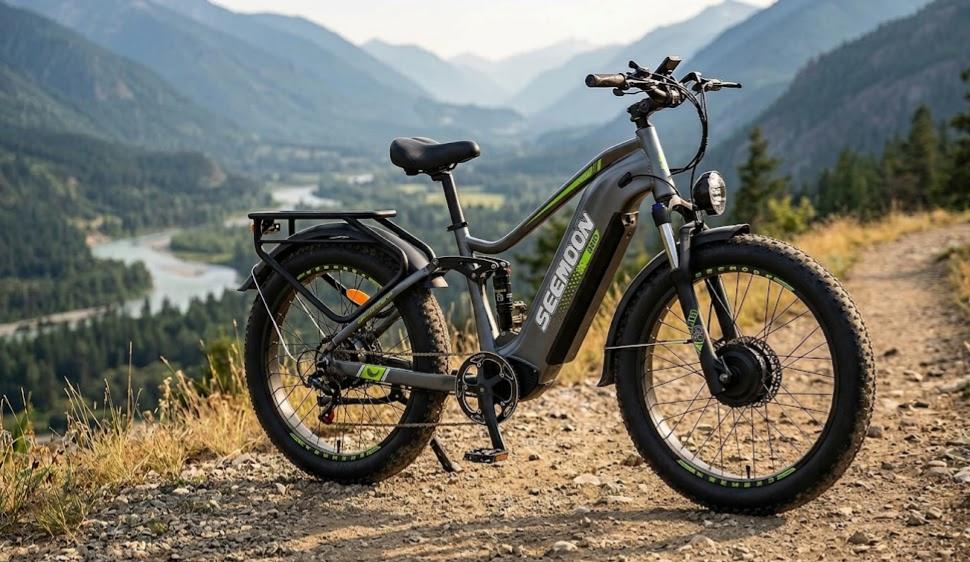
he rapid evolution of lithium-ion technology has blurred the lines between traditional cycling and powersports. For US consumers looking to upgrade their off-road capabilities, the decision often comes down to two distinct categories: an electric dirt bike or an electric bike (e-bike).
While both utilize brushless DC motors and high-capacity battery packs, their underlying engineering, legal classifications, and practical applications are fundamentally different. Choosing the wrong platform can result in limited trail access, inadequate performance, or compliance issues with local laws. This guide breaks down the technical differences, structural physics, and practical ownership costs to help you make an informed decision.
1. Core Engineering and Definitions
To understand the difference between electric bicycles and electric motorcycles, it is essential to first clarify the definitions of each.
The Electric Bike (E-Bike)
An electric bike retains the structural geometry and drivetrain of a standard bicycle, including pedals, a chain or belt drive, and a cassette. The motor—whether a geared hub or mid-drive—is designed to supplement human power through a Pedal Assist System (PAS) or operate independently via a throttle.
Frames are typically constructed from 6061 aluminum alloy to balance torsional rigidity with a lightweight profile, making them highly efficient for both paved commutes and moderate technical trails.
The Electric Dirt Bike (E-Motorcycle)
An electric dirt bike eliminates the pedal drivetrain entirely, operating solely via a throttle. These machines are engineered for severe impacts, utilizing heavy-duty motorcycle-grade suspension, reinforced swingarms, and oversized rotors.
The primary focus is maximum torque delivery and raw speed, designed to replicate or exceed the performance of a 50cc to 250cc gas-powered motocross bike.
2. The Technical Divide: Performance and Electrical Architecture
To understand the difference between electric bicycles and electric motorcycles, more importantly, it is essential to clarify their differences and connections in terms of power output and electrical architecture.
Voltage Systems and Thermal Management
Ordinary Electric Bikes
Standard electric bikes generally rely on 48V or 52V systems. These are highly efficient for maintaining speeds of 20 to 28 mph and navigating standard inclines. However, when pushed to their limits in deep sand or steep technical climbs, lower voltage systems draw higher amps to compensate, leading to severe voltage sag and potential thermal runaway within the controller or hub motor.
Electric Dirt Bikes
Some high-performance e-bikes(for example Seemoon sm3) and electric dirt bikes utilize 60V or 72V architectures. A 60V system operates with vastly superior electrical efficiency. By pushing power at a higher voltage, the system requires fewer amps to achieve the same wattage output. This drastically reduces heat generation and eliminates the performance drop-off associated with voltage sag during sustained throttle use.
Drivetrain and Traction Dynamics
Electric Dirt Bikes
Electric dirt bikes deliver massive rotational force to the rear wheel, requiring heavy-duty chains and sprockets. This setup excels in motocross environments but is prone to wheel spin on loose gravel or ice if the rider lacks throttle control.
Electric Bikes
Advanced e-bikes mitigate traction loss through Dual-Motor AWD (All-Wheel Drive) systems. By splitting the power output between the front and rear hubs, an AWD e-bike grips loose terrain rather than digging into it. This dual-traction setup provides unparalleled stability and helps prevent harmonic resonance (often referred to as "death wobble") when navigating highly uneven terrain at high speeds.
3. Head-to-Head Technical Comparison
| Technical & Operational Metrics | Electric Bike (E-Bike) | Electric Dirt Bike (OHV) |
| Common System Voltages | 52V / 48V (Sustained efficiency) | 60V / 72V (High-burst amperage) |
| Top Speed Thresholds | 20 mph (Class 1/2) to 28 mph (Class 3) | 36mph to 45+ mph |
| Drivetrain & Controls | Pedal Assist System (PAS) + Thumb/Twist Throttle | Pure Twist Throttle (No pedals or PAS) |
| Suspension Configuration | Standard 80mm–140mm travel bicycle forks | 180mm+ travel inverted motorcycle forks |
| US Legal Access Rights | Federal Public Law 107-40; Class 1/2/3 state laws | Restricted to private land, tracks, or BLM OHV areas |
| Typical Machine Weight | 55 lbs – 85 lbs | 110 lbs – 160 lbs |
4. The Legal Landscape: US Federal and State Regulations
Riding a two-wheeled electric vehicle in the United States requires strict adherence to localized right-of-way laws. Ignoring these boundaries can result in costly citations, misdemeanor charges, or vehicle impoundment.
The E-Bike Three-Class System
The majority of US states have adopted the standardized three-class e-bike framework to regulate street-legal operation:
-
Class 1: Pedal-assist only; motor ceases assistance at 20 mph. Allowed on almost all bike paths.
-
Class 2: Throttle-actuated or pedal-assist; motor ceases assistance at 20 mph. Allowed on most urban infrastructure.
-
Class 3: Pedal-assist only (though some jurisdictions permit throttles); motor assists up to 28 mph. Often restricted to commuter roads and dedicated bike lanes.
Under this legal framework, e-bikes do not require registration with the DMV, annual emissions or safety inspections, liability insurance, or a specialized motorcycle endorsement on your driver’s license.

Electric Dirt Bike Regulations
Electric dirt bikes do not have pedals and exceed the 750W/28 mph federal limits for e-bikes. Consequently, they are classified as Off-Highway Vehicles (OHVs).
-
They are strictly prohibited on sidewalks, bike lanes, and standard mountain bike trails.
-
Operating an OHV on public streets is illegal unless modified for dual-sport registration, which requires DOT-approved lighting, mirrors, and a motorcycle license.
-
Riding is restricted to private property or state-designated OHV/motocross parks.
5. Comprehensive Pros & Cons Analysis
Electric Bike
-
Pros:
-
Maximum Accessibility: Seamless integration into daily life, allowing you to commute to work, run errands via bike lanes, and park at standard bicycle racks.
-
Exercise Versatility: Riders can adjust the PAS output to blend muscular effort with motor assistance, making it an excellent tool for aerobic fitness.
-
Simplified Logistics: Lightweight enough to be mounted onto standard hitch-mounted vehicle racks or loaded into an SUV without specialized equipment.
-
-
Cons:
-
Speed Limitations: For some cheap electric bicycles, the capped speeds mean it cannot keep pace with fast-moving rural traffic or satisfy riders seeking high-speed off-road thrills.
-
Electric Dirt Bike
-
Pros:
-
Unrivaled Off-Road Dynamics: Instantaneous torque provides incredible climbing ability on loose shale, deep mud, and steep singletrack gradients.
-
Heavy-Duty Shock Absorption: Inverted dual-crown forks and progressive linkage rear suspension isolate the rider from violent impacts during high-speed jumps.
-
-
Cons:
-
Severe Geographic Limitations: Requires a dedicated transport vehicle (like a pickup truck or utility trailer) just to move the bike from your garage to a legal riding area.
-
Zero Human-Powered Redundancy: If you deplete the battery miles deep in the backcountry, the lack of pedals means you face a grueling physical challenge pushing a heavy machine back to staging.
-
6. How should I make a purchase decision between the two?
The decision between an electric bicycle and an electric motorcycle depends on your intended use and riding scenario. Consider these two contrasting consumer profiles to determine your ideal match:
Scenario A: The Urban Commuter and Weekend Explorer
If you need a reliable vehicle for a 10-mile pavement commute on Monday morning, but want to explore gravel fire roads, fire breaks, or state park trails on Saturday afternoon, an electric bike is your only logical choice. It gives you the legal right-of-way to navigate traffic congestion via bike lanes while retaining enough mechanical durability to handle mild off-road terrain.

Scenario B: The Pure Off-Road Adrenaline Enthusiast
If you have no interest in urban commuting, already own a truck to transport your gear, and intend to spend your time carving berms, launching off ramps, or riding deep within designated OHV state parks, look at an electric dirt bike. A traditional e-bike will not survive the structural stress of sustained motocross abuse.

7. Premium Engineering Solutions: The Seemoon Lineup
As a high-end manufacturer integrating R&D and production of electric bicycles and electric motorcycles, Seemoon 's lineup is designed to bridge the gap between compliance and capability.
Seemoon SM3 : The Ultimate All-Terrain Hybrid
The Seemoon SM3 represents a masterclass in modern all-terrain e-bike design. Rolling on ultra-wide fat tires, it provides excellent flotation over sand, snow, and loose gravel while maintaining full compliance with US Class 2/3 road regulations.

Seemoon SM1: The Agile Off-Road Specialist
Built specifically for technical singletrack, the Seemoon SM1 features aggressive mountain bike geometry, a responsive air-suspension fork, and a torque-sensing motor. It feels right at home on steep, tight trails where handling agility and natural-feeling pedal assistance are paramount.

Seemoon SM8: The Long-Range Cargo Nomad
Engineered for multi-day bike packing trips and heavy utility work, the Seemoon SM8 utilizes an efficient low-amperage electronic controller paired with a massive battery configuration. It is built to minimize voltage sag over long distances, providing steady power even when the battery charge drops below 20%.

Seemoon SM4 Pro: The High-Voltage Electric Dirt Bike
For riders who refuse to compromise on power. Stripped of pedals and built around a 60V heavy-duty powertrain, the Seemoon SM4 Pro is a pure off-road animal. It features dedicated motorcycle wheels, electronic regenerative braking, and an integrated thermal management heat sink to keep operating temperatures safe during aggressive closed-course racing.

8. Frequently Asked Questions (FAQ)
Q: Can I modify my Seemoon e-bike to make it go as fast as an electric dirt bike?
A: Modifying controller firmware or upgrading voltage parameters to bypass legal speed limits is not recommended. Doing so voids your warranty, accelerates component wear, increases the risk of battery overheating, and strips away your legal status as an e-bike, rendering the vehicle illegal on public pathways.
Q: Do BLM lands allow electric bikes on non-motorized mountain bike trails?
A: Under current federal guidelines, BLM and USFS rules vary by district. In many regions, Class 1 and Class 2 e-bikes are allowed on traditional non-motorized trails, whereas Class 3 e-bikes and electric dirt bikes are strictly prohibited and limited to motorized OHV routes. Always check with local ranger stations before riding.
Q: How does the bottom-removal battery design on the SM3 protect the electrical contacts?
A: By positioning the battery release on the underside of the down-tube, gravity works in your favor to prevent water pooling around the primary terminal connectors. It also allows the top section of the downtube to remain completely sealed, protecting the core electrical infrastructure from rain, mud, and debris kicked up by the front tire.
Share:
Cadence Sensor vs. Torque Sensor: Which electric bicycle pedal assist system should I choose?
The Ultimate Off-Road Showdown: Electric Dirt Bike vs. Gas Dirt Bike – Which Beast Rules the Trail?