
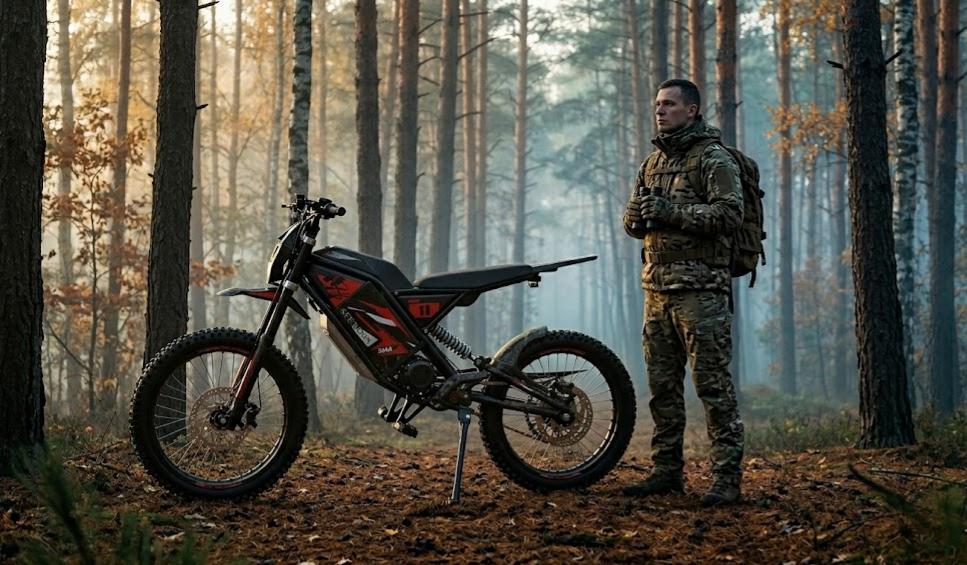
The off-road landscape is undergoing a massive architectural shift. For decades, the high-revving bark of a two-stroke or four-stroke internal combustion engine (ICE) was the undisputed soundtrack of public trails and private tracks across the United States. However, advancements in high-voltage battery chemistry and brushless motor efficiency have propelled electric powertrains into serious competition.
Whether you are a seasoned hard enduro rider looking to minimize maintenance overhead, a backcountry hunter requiring silent mobility, or a newcomer trying to bypass the steep learning curve of clutch modulation, choosing between an electric dirt bike and a gas dirt bike requires a clinical breakdown of engineering, economics, and regional regulations.
Learn about two types of off-road motorcycles: electric and gasoline-powered.
Before delving into a comparison between electric dirt bikes and gas dirt bikes, it's crucial to understand how they work. While they may look very similar, their internal mechanisms determine their power output.
What is a Gas Dirt Bike?
A gas dirt bike is an off-road motorcycle powered by a fossil-fuel-burning, internal combustion engine (either 2-stroke or 4-stroke). It relies on a highly complex mechanical network: a fuel delivery system (carburetor or electronic fuel injection), a multi-speed manual transmission, a wet or dry clutch system, and an exhaust setup to manage backpressure and emissions. Power is tightly tied to the engine's RPM range, requiring the rider to constantly shift gears to stay within the optimal "powerband."
What is an Electric Dirt Bike?
An electric dirt bike replaces the combustion engine and fuel tank with a high-capacity lithium-ion battery pack and a high-efficiency electric motor (typically a permanent magnet brushless DC motor). Instead of a multi-gear transmission, most electric models utilize a direct-drive or single-speed reduction system. Speed and power delivery are managed electronically via a controller that regulates current (I) and voltage (V) from the battery to the motor, translating throttle input into instantaneous mechanical rotation.

Technical Dimensions: Power Delivery, Acoustic Profiles, and Dynamics
Power Delivery and Voltage Sag
Gas Dirt Bike
The most striking behavioral difference lies in torque delivery. A gas dirt bike generates torque dynamically; the engine must rev up to a specific RPM before peak power is achieved. If you find yourself in the wrong gear while climbing a technical rock step, the engine may bog down or stall completely unless you slip the clutch.
Electric Dirt Bike
Conversely, an electric dirt bike delivers instant torque from 0 RPM. Because electric motors do not need to build up rotational momentum, throttle response is immediate and linear. In high-performance electric architectures, engineers must manage voltage sag—a temporary drop in voltage that occurs under maximum current draw,
Premium systems (For example, SM4 Pro) mitigate this by utilizing high-voltage electrical architectures (such as 60V or higher) and advanced Battery Management Systems (BMS) to maintain stable current output even under high thermal loads.
Acoustic Signatures and Trail Footprint
Gas Dirt Bike
Traditional internal combustion bikes produce high-decibel exhaust notes, often exceeding 90 to 100 dB under load. This requires spark arrestors to comply with US Forest Service (USFS) rules and frequently leads to trail closures near residential boundaries due to noise complaints.
Electric Dirt Bike
Electric off-road bikes operate with a minimal acoustic footprint, generating only low-amplitude high-frequency motor whine and chain slap (typically under 65 dB). This near-silent operation minimizes disturbance to surrounding people and the natural environment.
Thermal Dynamics and Weight Distribution
Gas Dirt Bike
Gas bikes generate massive amounts of ambient heat, requiring heavy liquid-cooling radiators or large cooling fins that are vulnerable to damage during a crash. Their weight distribution changes constantly as fuel is consumed from the top-mounted tank.
Electric Dirt Bike
Electric bikes feature a fixed weight distribution since the battery mass remains constant. However, they require sophisticated thermal dissipation strategies. Under continuous high-load riding (like deep sand or steep vertical climbs), the motor and controller generate significant heat. High-end models utilize central mid-drive motor mountings with integrated heat sinks to protect the magnets from demagnetization and prevent thermal runaway.

Total Cost of Ownership (TCO) Analysis
When calculating the true cost of an off-road machine, riders must look past the initial MSRP and evaluate the entire lifecycle expenditure.
Upfront Capital vs. Lifecycle Maintenance
High-performance electric off-road bikes often carry a premium upfront cost compared to equivalent displacement gas bikes, primarily driven by the cost of high-grade lithium cells. However, the operational lifecycle costs tell a completely different story.
A gas bike demands a rigorous, expensive maintenance schedule:
-
Regular engine oil and filter swaps every 10–15 riding hours.
-
Frequent air filter cleaning and re-oiling to prevent piston scoring.
-
Periodic top-end rebuilds (pistons, rings, and gaskets) and valve adjustments.
An electric drivetrain eliminates more than 80% of these moving parts. There are no pistons to seize, no valves to adjust, no oil to change, and no carburetors to gum up from stale winter fuel. Maintenance is largely reduced to standard bicycle-style wear items: brake pads, tires, and drive chain tensioning.
Fuel Volatility vs. Electrical Grid Stability
In the current macroeconomic climate, energy costs are a critical variable for American riders. Geopolitical instabilities in oil-producing regions consistently drive high-octane pump gasoline prices upward, making weekend trail trips increasingly expensive.
Electricity rates across most US regions remain decoupled from crude oil volatility. Charging a high-capacity electric dirt bike battery pack from a standard 110V or 220V home outlet consumes only a fraction of a kilowatt-hour (K-Wh). For example, fully replenishing a large battery pack costs less than 50 cents in average US residential electricity rates, this results in a predictable overall operating cost that is unaffected by rising fossil fuel prices.
Comprehensive Pros & Cons Breakdown
To provide a clear framework for prospective buyers, let us look at an expanded matrix of advantages and disadvantages for both platforms.
Electric Dirt Bikes
-
PRO: Ultra-Low User Barrier: No clutch lever to master and no foot-shifting required. Riders can focus 100% on line selection, body positioning, and brake modulation.
-
PRO: Extremely Low Noise Impact: You are allowed to practice and ride in your backyard or neighborhood without causing complaints from your neighbors.
-
PRO: Zero Starting Friction: No strenuous kickstarting or cold-weather carburetor choking. Push a button, twist the throttle, and ride.
-
PRO: No Fluid Contamination Risks: Can be transported horizontally inside an SUV or truck bed without risking oil leaks or highly flammable gasoline fumes.
-
CON: Range and Replenishment Latency: Gasoline-powered off-road motorcycles have a longer range, and can be refueled in seconds, whereas batteries can take hours to recharge in the wild.
-
CON: Susceptible to Environmental Changes: Extreme ambient cold drops lithium-ion efficiency, Furthermore, operating the battery at extremely high ambient temperatures may trigger protective thermal throttling, causing the battery to suddenly stop supplying power during riding.
Gas Dirt Bikes
-
PRO: Infinite Trail Autonomy: As long as you can carry auxiliary fuel jugs in your truck or a fuel bladder on your back, your riding session can extend indefinitely.
-
PRO: Mature Mechanical Ecosystem: Every small town in rural America has experienced mechanics who can quickly procure parts and repair internal combustion engines.
-
PRO: Advanced Clutch Feedback: Experienced riders use the clutch to instantly spike the RPMs,
-
CON: Intense Mechanical Depreciation: A single intake of dust or water can destroy an engine, resulting in thousands of dollars in mechanical repair bills.
-
CON: Rigid Trail Restrictions: Banned from many close-in municipal trails due to fire hazards (exhaust sparks) and strict noise ordinances.
US Land Management & OHV Regulations
Navigating public land access in the United States requires strict adherence to state and federal definitions of Off-Highway Vehicles (OHV).
The US Forest Service (USFS) and the Bureau of Land Management (BLM) catalog traditional gas-powered dirt bikes strictly as OHVs or off-road motorcycles. This subjects them to mandatory annual registration, out-of-state permits, and strict seasonal closures (such as California's historical Red Sticker/Green Sticker environmental compliance matrix).
Electric dirt bikes exist in a evolving regulatory landscape. Because they do not emit tailpipe greenhouse gases and comply with strict noise limits, certain jurisdictions categorize lightweight electric off-road bikes more leniently. While heavy, high-speed electric motorcycles still require standard OHV decals, however, they can usually enter riding areas where internal combustion engine vehicles are permanently prohibited.
Electric Dirt Bike vs Gas Dirt Bike: How to Choose for Different Riders and Scenarios
There is no universally "superior" dirt bike; there is only the correct tool for your specific operational environment.
Scenario A: The Backcountry Hunter & Wilderness Scout
For hunters operating in states like Idaho, Montana, or Utah, stealth is paramount. A gas bike's acoustic signature will clear wildlife out of a valley miles before the rider arrives. An electric bike allows a hunter to navigate deep into backcountry access roads silently at dawn, carrying gear without leaving a heavy scent or noise trail.

Scenario B: Long-Range Desert Overlanding
For riders tackling massive, multi-day overland routes across the Mojave Desert or the remote trails of Moab, Utah, a gas dirt bike remains the logical choice. After all, in areas where charging infrastructure is completely lacking, gasoline still has a higher energy density and faster refueling speed than lithium-ion battery packs, thus meeting the needs of long-distance, continuous high-speed driving.
Scenario C: The Suburban Commuter & Weekend Trail Enthusiast
For the rider who wants a low-stress machine for local trail riding, local MX tracks, or occasional urban fire-road exploration, the convenience, lack of maintenance, and neighborhood-friendly nature of an electric bike make it unmatched.
Product Spotlight: The Seemoon SM4 Pro Electric Dirt Bike
Seemoon aims to meet the North American market's demand for high-performance electric motorcycles, striving to overcome the limitations of early electric motorcycles in terms of insufficient power output.
For riders seeking an uncompromising bridge between raw performance and electric efficiency, the Seemoon SM4 Pro electric dirt bike represents the pinnacle of modern off-road engineering.
High Performance Engineering Specifications:
-
60V High-Voltage Electrical Architecture: The SM4 Pro operates on a robust 60V system designed to maximize current efficiency and drastically reduce the risk of power loss during aggressive riding.
-
High-Efficiency Mid-Drive Motor: Unlike heavy hub motors that compromise suspension performance, the SM4 Pro utilizes a centrally mounted mid-drive motor. This keeps the center of mass balanced between the pegs, optimizing the bike’s handling, jump dynamics, and tracking.
-
250Nm of Instantaneous Torque: This extreme torque profile allows the SM4 Pro to blast out of deep ruts, and effortlessly climb 45° steep inclines that would cause traditional 125cc or 250cc gas engines to stall out.
-
45 mph Top Speed: A well-calibrated powertrain enables a top speed of 45 mph, offering plenty of top-end performance for wide-open fire roads and fast desert two-tracks.
-
Bottom-Extraction Battery Configuration: Designed with practical maintenance and low-center-of-gravity physics in mind, the high-capacity battery pack is removed seamlessly from the under the seat. This architectural choice ensures the heaviest single component sits as low as possible on the frame, boosting cornering stability and front-end bite.
Final Verdict
The choice between an electric dirt bike and a gas dirt bike ultimately comes down to your operational style. If your goals involve long-distance wilderness exploration where carrying extra fuel is a necessity, a traditional gas bike remains highly capable.
However, if you want to maximize your actual riding time, eliminate tedious garage work, ride without waking the neighbors, and insulate yourself from volatile pump prices, a high-voltage machine like the Seemoon SM4 Pro is the future of off-road adventure.

Frequently Asked Questions (FAQ)
Are electric dirt bikes street legal in the United States?
By default, most high-performance electric dirt bikes are built strictly for off-highway vehicle (OHV) use. To make them fully street legal, they must be retrofitted with a dual-sport compliance kit (headlight, brake lights, turn signals, mirrors, and a horn) and registered through your state’s Department of Motor Vehicles (DMV) to receive a license plate.
Can a 60V electric dirt bike perform as well as a 250cc gas bike?
In tight single-track, technical rock climbs, and short-course racing, yes. The 250Nm instant torque of a mid-drive electric bike like the Seemoon SM4 Pro will often outperform a 250cc four-stroke gas bike from a dead stop or out of low-speed corners. However, a 250cc gas bike will still maintain a higher sustained top speed on long, open straightaways.
How does mud and deep water affect an electric dirt bike's electronics?
Premium electric dirt bikes feature high International Protection (IP) ratings—typically IP65 to IP67—for their motors, controllers, and battery compartments. This means they are completely sealed against dust entry and can easily handle heavy mud, intense pressure washing, and brief deep-puddle submersions without risking electrical shorts.
Share:
Electric Dirt Bike vs. Electric Bike: The Ultimate Guide to Off-Road Dominance
The No-BS Electric Dirt Bike Guide: TOP 15 FAQs & Seemoon SM4Pro Unleashed