
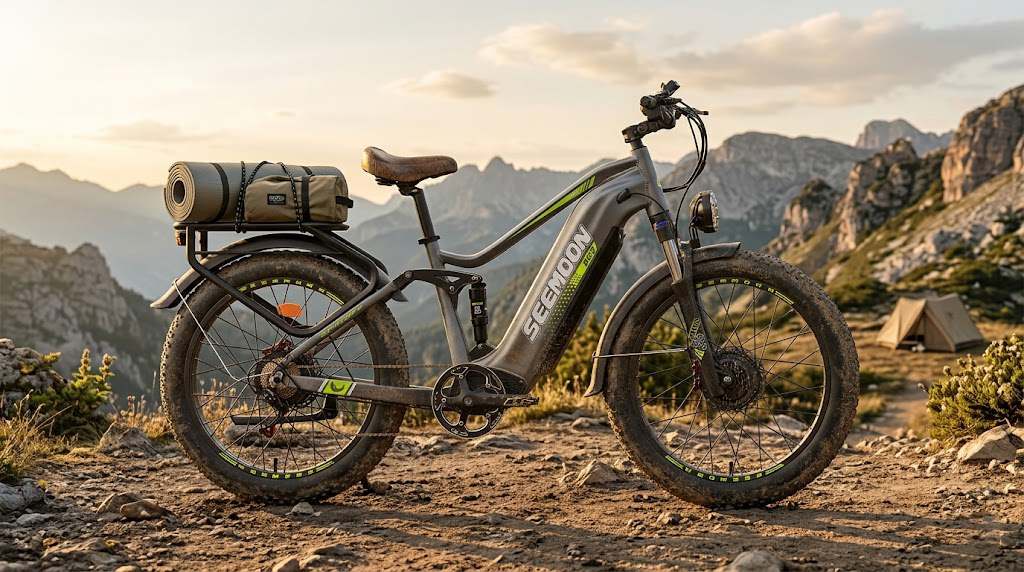
Key points of brushless wheel hub motor
A brushless electric bicycle wheel hub motor is a sealed, direct-drive powertrain critical for off-road e-bikes. By eliminating physical brushes, these motors eradicate internal friction. For overlanding survival, they rely on IP67 weatherproofing, vibration-resistant potting compounds, and advanced thermal dissipation. High-voltage 60V architectures, like those in the Seemoon SM3 all terrain ebike series, draw lower amperage than 48V systems, preventing thermal runaway during heavy cargo climbs. Combined with bottom-loading battery designs and UL 2849 certification, these hub motors provide unmatched off-grid reliability.
When you're carrying camping gear and riding twenty miles along remote mountain trails in such harsh conditions, whether your electric bike's drivetrain can withstand extreme temperatures, violent impacts, and torrential rain will determine whether you can complete a fantastic wilderness adventure or have to push your broken-down electric bike and trek home.
At the core of the world's most reliable off-grid e-bikes is the brushless electric bicycle wheel hub motor. But what exactly makes this specific piece of engineering so resilient compared to a standard mid-drive?
As part of the ultimate guide to in-wheel hub motors ,We are tearing down the motor casing to explore the raw physics, thermal dynamics, and structural defenses that keep heavy-duty overlanding rigs moving forward when traditional bikes fail.
Key Takeaways for the Off-Road Rider
-
Zero Mechanical Wear: Brushless technology uses electromagnets instead of physical contact points, maximizing lifespan.
-
Thermal Superiority: 60V systems run significantly cooler than 48V systems under heavy payloads.
-
Sealed Defenses: IP67 ratings and bottom-loaded battery architectures prevent water ingress.
-
Vibration Resistance: Hardened epoxy potting compounds protect internal sensors from rock garden impacts.
1. Inside the E-Bike Hub Motor: Why Brushless Architecture Matters
If you are taking an off-road e-bike into the backcountry, the drivetrain is going to take a beating. Older electric motors used physical carbon brushes that actively rubbed against a commutator to transfer electrical current. Once you introduce trail dust, heavy vibration, and moisture into that housing, those brushes quickly wear down, arc, and fail.
Modern electric mountain bikes solve this by using a Brushless DC (BLDC) hub motor. By eliminating mechanical contact, a brushless motor relies entirely on magnetic fields to generate power.
Here is what is actually happening inside the casing:
-
The Stator: This is the stationary inner core of the motor, tightly wrapped in copper wire windings. When current from your e-bike battery hits these coils, they become powerful electromagnets.
-
The Rotor: This outer shell connects directly to your wheel's spokes. Its interior wall is lined with permanent neodymium magnets.
-
Hall Effect Sensors: These micro-sensors are embedded in the stator to track the exact position of the rotor's magnets. They tell your motor controller exactly when to fire the next electrical pulse, ensuring smooth, consistent torque on steep climbs.
Because the physical brushes are gone, internal mechanical friction is effectively zero. The only internal parts bearing any physical load are the heavy-duty, sealed steel axle bearings. This solid-state reliability is exactly why a high-quality brushless motor doesn't just survive rough trails—it often outlasts the bike itself.

2. Deep Dive: Thermal Diagnostics Under Overlanding Loads
The absolute worst enemy of any electric motor is heat. When you load an e-bike with 250 lbs of rider and gear, and attempt a sustained 20-minute climb up a steep grade, the motor draws massive electrical current.
Due to the physical laws of electrical resistance (known as Joule heating, where power loss equals current squared multiplied by resistance), pushing massive current through copper windings generates intense thermal energy. If this heat cannot escape the sealed casing, the internal temperature spikes. This condition, leading toward thermal runaway, can melt the protective enamel on the copper windings, fry the Hall sensors, or permanently demagnetize the neodymium magnets.
Heat Dissipation in a Sealed Casing
Because off-road motors must be completely sealed against water and mud, they cannot utilize cooling fans or open air vents. Instead, the motor relies entirely on thermal mass and passive conduction. The heat generated in the stator must transfer across the tiny air gap inside the motor, sink into the thick outer aluminum alloy casing, and finally dissipate into the outside air.
48V vs. 60V: The High-Voltage Cooling Advantage
This is where system voltage dictates your survival on the trail. A standard 48V e-bike must push high amperage to generate the wattage needed for a heavy climb. High amperage inevitably equals high heat.
By engineering a high-voltage architecture—such as the 60V system utilized in the Seemoon SM3 —the motor achieves the exact same power output (Watts) while drawing significantly fewer Amps. Fewer amps mean drastically reduced thermal buildup.
Data Driven Comparison: 15% Grade Incline with 250lb Payload
| Metric | Standard 48V Hub Motor | Seemoon 60V Hub Motor | Impact on Rider |
| Amperage Draw (Peak) | High (~20-22 Amps) | Lower (~15-17 Amps) | Less strain on battery cells. |
| Casing Temperature | Very Hot (Prone to throttling) | Warm (Stable continuous output) | Consistent torque without losing power. |
| Efficiency Loss | High (Energy lost as heat) | Low (Energy converted to motion) | Longer battery range on steep climbs. |
(To see how this thermal efficiency compares directly to mid-drive systems, read our full breakdown: Hub Motor vs Mid Drive for Overlanding).
3. How Seemoon withstands severe weather: weatherproof and integrated design
When off-roading in the wilderness, your power system is exposed to the corrosive effects of deep mud, rivers, and coastal salt spray. Therefore, Seemoon has designed the in-wheel motor of its e-bikes to operate like a sealed fortress.
Defeating Mud and River Crossings (IP54 Ratings)
When evaluating an off-road e-bike, the Ingress Protection (IP) rating is your ultimate metric. An IP54 rating means the motor is fully dust-tight and can survive temporary submersion in water up to 1 meter deep.
Seemoon high-performance wheel hub motor achieve this through specialized automotive-grade rubber gaskets, high-temperature silicone sealants around the cable entry points, and double-sealed cartridge bearings on the axle.

The Bottom-Load Battery Advantage
Crucially, a motor is only as weatherproof as its power source. Many e-bikes feature batteries that drop in from the top of the frame. This creates top-facing seams where rainwater, snow, or mud can pool, eventually seeping into the battery contacts and shorting the system.
Professional overlanding rigs like the SM3 are designed so that the battery is removed from the bottom of the downtube, not the top. This gravity-defying architecture completely shields the connection points from direct rainfall and pooling water, ensuring consistent power delivery to the hub motor even in a torrential downpour.
UL 2849 Certification: Trust in the Wild
When you are off the grid, catastrophic electrical failures are not just inconvenient; they are dangerous. Seemoon batteries strictly adhere to the UL2849 standard to maximize your safety while riding. the UL 2849 standard is the most rigorous electrical and fire safety certification for e-bikes. It ensures that the hub motor, the motor controller, and the battery operate in perfect harmony, with fail-safes built in to prevent overcharging, short-circuiting, and thermal runaway. Never take a non-UL-certified electrical system into the deep wilderness.
4. Impact Resistance and Structural Integrity
In addition to withstanding complex and harsh weather conditions, an excellent all-terrain off-road e-bike must be able to withstand severe physical impacts and electrical stress.
Protecting the Brain: Potting Compounds
The Hall sensors inside the motor are fragile. Constant high-frequency vibrations from riding over rock gardens can snap the delicate soldered legs of these sensors. To prevent this, Seemoon use a specialized industrial "potting compound"—a rock-hard epoxy resin poured over the sensors and internal circuit boards. This locks them permanently in place, making them impervious to trail vibration.
12-Gauge Spokes and Wheel Truing
A high-torque brushless wheel hub motor is a heavy piece of equipment, often weighing over 10 lbs. When this mass hits a pothole or a tree root at 20 mph, the kinetic force is transferred directly to the spokes. Seemoon's custom-designed off-road hub motor utilize ultra-thick 12-gauge (12G) stainless steel spokes laced in a cross-pattern. This heavy-duty lacing absorbs the impact, preventing the wheel from buckling under the combined weight of the heavy hub motor and your overlanding payload.
5. Conclusion: The Ultimate Off-Grid Powertrain
For the serious backcountry explorer, the brushless electric bicycle wheel hub motor represents the pinnacle of reliability. It is a sealed, friction-free powerhouse that turns raw electrical theory into unstoppable traction.
Seemoon SM3 uses high-voltage engineering to control heat dissipation and locking out the elements with smart frame integration, it ensures that your focus remains on the trail ahead, not on the mechanics below you.

Frequently Asked Questions (FAQ)
Does a brushless wheel hub motor require internal lubrication?
If you are running a direct-drive brushless motor, absolutely no internal lubrication is required because there are no moving gears. If you are using a geared brushless hub motor, the internal planetary gears are heavily packed with a high-temperature synthetic grease at the factory, which easily lasts for thousands of miles.
Is it safe to cross a river with a hub motor e-bike?
Yes, provided the motor is rated IP67 and the water level does not submerge the battery compartment or the motor controller. Maintain a steady, low speed to avoid splashing water upwards into unsealed components.
How does an e-bike kickstand handle the extra weight of a rear hub motor off-road?
The extra weight requires a robust, reinforced kickstand. When parking in the wild, always ensure the e-bike is parked on flat ground with the kickstand resting firmly on the dirt or rock, rather than appearing suspended or propped precariously. The frame and kickstand mount are designed to bear this payload when properly grounded.
Why is 60V better than 48V for a hub motor?
A 60V system delivers the same amount of power (Watts) to the motor as a 48V system but uses fewer Amps to do so. Because high Amps generate heat, the 60V system runs significantly cooler, reducing the chance of the motor overheating on steep climbs.
Share:
Hub Motor vs Mid Drive: The Overlander’s Guide to All-Terrain Dominance
Cadence Sensor vs. Torque Sensor: Which electric bicycle pedal assist system should I choose?