
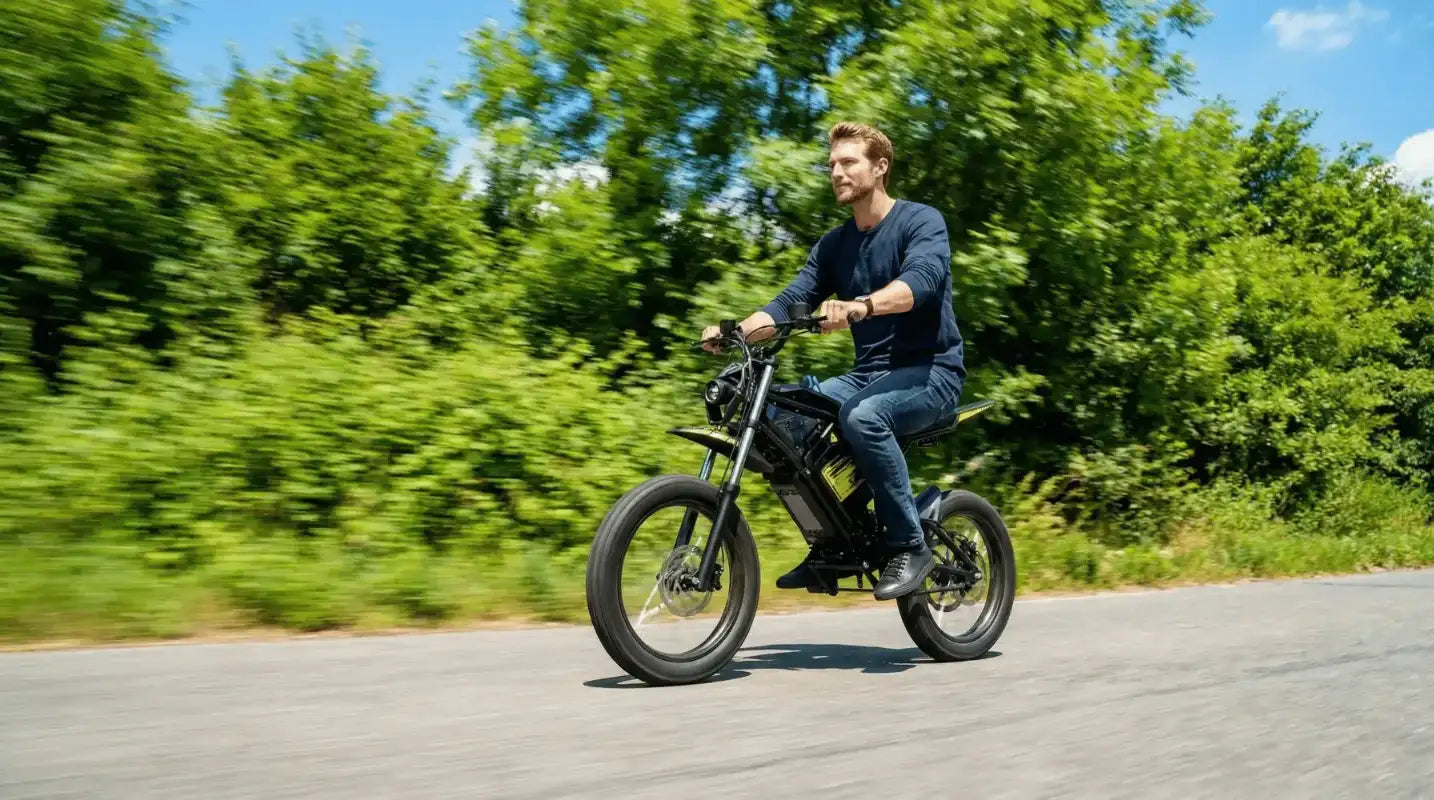
Summary
As we approach the 2026 model year, the light electric vehicle (LEV) market is undergoing a fundamental fragmentation. We are witnessing a definitive shift from standard, recreational "e-bikes" toward high-output Electric Mopeds and Utility Scramblers. The modern rider’s requirement specification has evolved: the demand is no longer just for range, but for superior power-to-weight ratios, high-torque climbing ability, and DOT-standard safety compliance.
This technical guide bypasses marketing rhetoric to focus on engineering reality. utilizing the industry-benchmark SEEMOON SM4 as our primary reference point, we will dissect the physics and fabrication behind a true performance machine. We will rigorously examine the six critical pillars of electric mobility: Powertrain Architecture, Chassis Geometry, BMS & Energy Management, Hydraulic Braking Systems, Maintenance Protocols, and Regulatory Compliance. Consider this your white paper on the engineering required to own the road.
Chapter 1: The Powertrain — Why Torque Eats "Watts" for Breakfast
1.1 The Wattage Trap: It’s Just the Starting Line
In the 2026 market, brands love to scream about "Peak Watts." But for real-world riding—especially when you’re staring down a steep hill, deep mud, or a holeshot at a stoplight—Torque is the only physics that matters.
Your average 20-inch fat tire e-bike typically pushes 80-90Nm of torque. That’s fine for flat pavement, but hit a 15-degree incline or loose sand, and that motor falls out of its efficiency zone, generating heat instead of speed.
The Authority Standard: A true All-Terrain machine demands a torque floor of 150Nm. Take the SM4. Its rated 48V 800W motor might look conservative on paper, but thanks to specialized magnetic circuit design and controller tuning, it cranks out a massive 170Nm of peak torque. At a peak output of 2000W, it delivers double the wheel torque of a standard e-bike. This "Low Wattage Rating, High Torque Output" strategy ensures the motor stays cool and durable at its rated speed of 1240 r/min, avoiding the overheating issues that plague over-clocked competitors.
1.2 The Controller: The Brain Behind the Brawn
Raw power is meaningless without control. If the motor is the muscle of the SM4, the controller is its highly evolved brain. Far more than a simple switch, this unit utilizes advanced algorithms to modulate energy flow with millisecond precision.
- Optimized Overcurrent Protection (35A ± 1A): We’ve calibrated the peak discharge to a precise 35 amps. This threshold is the engineering "sweet spot"—calculated to deliver aggressive, high-torque acceleration while staying safely below the thermal saturation point of the MOSFETs and coil windings. It ensures longevity without sacrificing the thrill.
- Linear "Stepless" Throttle Mapping: Forget the lurching feel of simulated gears or square-wave controllers. The SM4 utilizes a high-resolution throttle signal to provide buttery-smooth, linear power delivery. This ensures that 50% throttle equals 50% power, giving you predictable control across the entire RPM band.
1.3 Permanent Magnet Supremacy
High-performance electric scramblers rely on Rare-earth Neodymium-Iron-Boron brushless motors. This material dictates three non-negotiables:
- Torque Density: Small footprint, massive magnetic flux.
- Efficiency: Less heat waste means more range.
- Silent Operation: A slight hum is the only sound of efficient energy conversion.
Pro Tip: If a motor sounds like a coffee grinder or runs hot, the magnet quality is suspect. SM4’s warranty explicitly covers "demagnetization", proving they stand behind their materials.

Chapter 2: Chassis & Handling — Motorcycle Grade vs. Bicycle Grade
2.1 Wheel Physics: 17" Moto vs. 20" Bike
This is the biggest confusion in the crossover market. Most "moped-style" e-bikes run bicycle-standard 20-inch tires. True Scramblers like the SM4 run 17-inch Motorcycle Rims wrapped in 2.47-inch rubber.
Why does this matter?
- Gyroscopic Stability: A 17-inch moto tire has a larger outer diameter and thicker sidewall than a 20-inch bike tire. This creates a superior gyroscopic effect, keeping the bike planted and stable at its 28 mph (45 km/h) top speed. No speed wobbles here.
- Impact Resistance: Potholes destroy bicycle rims. Moto-grade spokes and rims are built to take a beating. The SM4’s 1200mm wheelbase strikes the golden ratio between highway stability and trail agility.

2.2 Suspension: More Than Just Springs
To legitimately claim "All-Terrain" status, a standard front fork is merely the barrier to entry—not the solution. True off-road capability demands a full-suspension geometry capable of managing complex kinetic energy. We aren't talking about basic springs here; a premium setup requires hydraulic inverted (USD) front forks paired with a progressive rear mono-shock.
Why is this combination essential?
- Kinetic Management: The hydraulic fluid controls rebound and compression, preventing the "pogo-stick" effect found in cheap spring-only dampers.
- Traction Maintenance: The rear mono-shock isolates the chassis from surface irregularities, keeping the rear wheel planted to deliver consistent torque.
- Rider Fatigue: By absorbing high-frequency vibrations and heavy G-outs, a full-suspension system significantly extends rider endurance.

2.3 Structural Integrity
Weighing in at 120 lbs, the SM4’s mass is a deliberate engineering choice, reflecting a chassis built for genuine durability rather than mere portability. This reinforced architecture supports a class-leading 330 lb (150 kg) payload capacity, ensuring stability under load. Unlike standard aluminum bicycle frames that risk micro-fractures under heavy stress, the SM4 offers fatigue limits designed for heavy-duty utility—whether you’re a larger rider or outfitting a rig for backcountry camping.
Chapter 3: Energy System — Real Range Math
3.1 The Hard Truth About Battery Capacity
When evaluating an electric motorcycle, it is crucial to look past the 'Max Range' claims in the marketing brochures. These figures are often generated under idealized laboratory conditions—low speeds, flat terrain, and minimal rider weight—that rarely reflect real-world riding. Instead, focus your attention on the battery’s Watt-hour (Wh) rating. Think of Watt-hours as the literal volume of your fuel tank; it is the objective measure of energy capacity derived from multiplying the battery's voltage (V) by its amp-hours (Ah). While manufacturers can manipulate range estimates, the Wh rating offers a hard, mathematical baseline for how far the bike can actually travel on a single charge
The Math: Voltage (V) x Amp-hours (Ah) = Total Energy (Wh)
The SM4 Benchmark:
- Voltage: 48V
- Capacity: 28Ah
- Total Energy: 48V × 28Ah = 1344Wh
This massive 1344Wh battery is the only reason the SM4 can legitimately claim a 50-100 mile range. With an efficiency of just 2 kWh per 100km, the permanent magnet motor sips power. Compare that to a standard 48V 14Ah e-bike (672Wh), and you're literally going twice the distance.

3.2 Battery Health & Chemistry
Think of the lithium-ion battery pack not just as a fuel tank, but as the financial and mechanical heart of your electric motorcycle. Often accounting for 30% to 50% of the bike’s total MSRP, this component represents your most significant long-term investment. Protecting that investment requires more than just plugging it in; it demands a disciplined approach to thermal management and charging habits to prevent premature degradation.
- Temp Window: Optimal performance is between 32°F and 113°F.
- Cold Weather Reality: Below freezing, expect a 20-30% capacity drop. This isn't a defect; it's chemistry.
- Storage Rule: Never store it dead. If you park it for winter, charge it every 15 days. Deep discharge leads to irreversible cell death.
3.3 Charging Logic
Your battery is the most expensive component of your e-moto. Here is how our charging logic is designed to keep it healthy for the long haul.
-
Stick to the Factory 4A Charger
Only use the OEM charger provided. It is specifically calibrated to communicate with your bike's Battery Management System (BMS). Using unauthorized high-amp chargers might save you an hour today, but it risks voiding your warranty and overheating the cells.
-
Patience Pays Off (8–9 Hour Charge)
Expect a full recharge to take roughly 8 to 9 hours. We intentionally avoid "ultra-fast" charging. Why? Because heat kills batteries。 Rapid charging stresses the internal chemistry, leading to reduced range over time. Our "slow-roast" approach ensures the maximum possible lifespan for your battery pack. Perfect for overnight charging.
-
Intelligent Protection (LVC)
SM4 have built in a safety net. The controller will automatically cut power if the battery hits 42V . This feature—known as Low Voltage Cutoff—prevents deep discharge, a state that can permanently damage lithium cells. If the bike stops, it's saving itself.
Chapter 4: Braking & Safety — Stopping is Not Optional
4.1 Hydraulic Power & The DOT4 Standard
When you are pushing a chassis to 28 mph, stopping isn't just a suggestion—it’s physics. At these speeds, the kinetic energy requires precise modulation that mechanical cable brakes simply cannot provide due to cable stretch and friction. For a high-performance machine like the SM4, a Hydraulic Disc Brake system isn't an upgrade; it is a safety requirement.
To maximize the effectiveness of the hydraulic system,The SM4 manual mandates DOT4 Brake Fluid, and there is a specific engineering reason for this choice. Unlike the mineral oil found in bicycle-grade systems, DOT4 is an automotive-grade glycol-based fluid. Its primary advantage is superior thermal capacity.
- High Boiling Point: DOT4 is engineered to withstand extreme heat generated during repeated hard braking.
- Preventing Brake Fade: On long, steep descents, heat transfers from the caliper to the fluid. If the fluid boils, it turns to gas (vapor lock), causing the lever to go to the bar without engaging the brakes. DOT4’s high boiling threshold prevents this dangerous phenomenon.

4.2 Smart Cut-Off System
Handling the SM4’s massive 170Nm torque output requires more than just powerful calipers; it requires intelligent software management. The SM4 features a Safety Cut-Off Protocol integrated directly into the motor controller. This system operates with millisecond latency: as soon as the brake microswitch is triggered, motor current is interrupted. This prevents "run-on"—a phenomenon where the motor continues to push against the hydraulic brakes.
Chapter 5: Maintenance — Wrenching Like a Pro
Owning a high-performance electric moped like the SM4 requires shifting from a "bicycle mindset" to a motorcycle maintenance mindset. The instant torque and unique weight distribution of an EV demand precision to ensure safety and longevity. Below are the critical service intervals and specifications pulled directly from the SM4 technical manual.
5.1 Drivetrain Dynamics: Chain Tension & Drive
The SM4 utilizes a chain drive system where tension is the primary variable for drivetrain efficiency. Unlike combustion engines, the immediate torque delivery of an electric motor puts significant stress on the chain.
-
The Gold Standard (Slack Spec): In a free-hanging state (unloaded), chain slack must be maintained strictly between 2–6 mm.
- Note: This is a tight tolerance compared to standard motorcycles; precision is non-negotiable here to prevent driveline lash.
-
Service Intervals:
- Break-in: Critical adjustment required at 62 miles (100km) as the chain plates settle.
- Maintenance: Inspect and adjust every 217 miles (350km) thereafter.
⚠️ Pro Mechanic Tip: Pay close attention to the Master Link Clip. The closed end of the clip must face the direction of the chain's rotation. Why? If the open end faces the direction of travel, debris or guides can snag the clip and pop it off, causing catastrophic chain failure at speed.
5.2 Rolling Hardware: Tire Pressure & Dynamics
Your tires are technically your primary suspension component. They are the only contact patch between you and the road.
- The Specification: Maintain Front and Rear pressure at 230±10 kPa (approx. 33 PSI).
-
The "Why" (Physics of Range):
- Too Low (<30 PSI): Increases rolling resistance, which significantly drains battery range and causes sluggish, "heavy" handling.
- Too High (>36 PSI): Reduces the contact patch, compromising grip and braking distance.
- Best Practice: Check pressure with a digital gauge before every ride (cold tires).
5.3 Environmental Protection: Waterproofing (IP54)
The SM4 carries an IP54 Ingress Protection rating. In technical terms, this means it is protected against limited dust ingress and water spray from any direction. It is not fully sealed against immersion.
- Cleaning Protocol: Use low-pressure water and automotive soap. Never use a high-pressure power washer on the motor hub, controller, or wiring harnesses, as high pressure can force water past the IP-rated seals.
-
Wading Depth: Never submerge the bike above the rear axle center line.
- The Risk: Water intrusion into the motor hub destroys insulation resistance, leading to short circuits and permanent controller failure.
Chapter 6: Compliance, Etiquette, & Responsibility
6.1 Legal & Startup
- The Sequence: Key on, press the "P" button to unlock. It's a safety latch, not a glitch.
- Age Limit: No riders under 16 years old on public roads.
- The Law: Stay in designated lanes. While the SM4 hits 28mph, obey local Class 2/3 e-bike or moped regulations.
- ID: The VIN is engraved on the right side of the seat tube —vital for insurance and registration.
6.2 Load & Ergonomics
- Payload: Max 330 lbs (150kg).
- Sweet Spot: For best handling, keep the load under 165 lbs (75kg). Overloading warps tires and overheats the motor.
- Fit: With a 30.5-inch seat height and a min rider height of 5'2", the SM4 is more accessible than a full-size dirt bike, perfect for urban assault or weekend trails.
6.3 Riding Modes
- Launch Control: Use Pedal Assist when starting on hills or against the wind. It reduces the massive current spike, saving your battery and controller.
- Data: Use the "+" and "M" buttons to toggle between MAX (Top Speed) and AVG (Average Speed) readouts on the dash to track your performance.

Conclusion: In 2026, Specs Don't Lie
The 2026 electric motorcycle market has evolved past the point of novelty. It now belongs to the educated rider who can distinguish between marketing fluff and mechanical reality. When you strip away the viral aesthetics and aggressive social media campaigns, you are left with the only metric that matters: engineering integrity.
The numbers define the ride. We aren't just looking at figures; we are looking at performance thresholds:
- 170Nm of Torque: This isn't just acceleration; it is instant, controllable power delivery at the wheel.
- 1,344Wh Energy Capacity: High-density storage that ensures your range matches your ambition.
- DOT 4 Hydraulic Systems: Automotive-grade thermal management for fade-free stopping power.
- 30Nm Axle Specification: Precision structural hardware designed for high-stress loads.
The SEEMOON SM4 signals the industry's shift from "recreational gadget" to "performance vehicle." It is a machine engineered with intent, prioritizing chassis rigidity and powertrain efficiency over gimmicks. Consider this guide your technical yardstick. If a bike cannot meet these baseline engineering standards, it is simply a toy—and it doesn’t belong in your garage.
Ready to feel real torque? Check availability today.
Share:
How to Choose the Best E-Bike in 2026: A Complete Guide to Specs, Safety, and Style
Best Electric Motorcycles for Adults : The "Torque" Ranking