
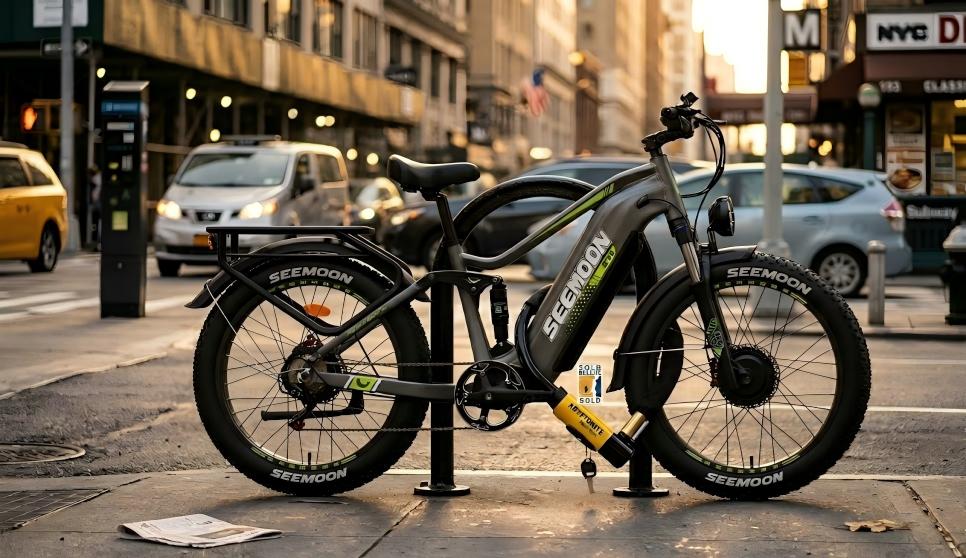
Electric Bike Insurance Key Takeaways:
-
Most standard US homeowners and renters insurance policies do not cover e-bikes, particularly Class 2 and Class 3 models.
-
Electric bike insurance typically covers theft, collision damage, liability, and medical payments.
-
How much is bike insurance? Dedicated e-bike insurance usually costs between $100 and $300 per year ($8–$25/month).
-
Pro Tip: Owning a UL-certified e-bike (like UL 2849) and using a Sold Secure Gold lock can significantly lower your premiums and guarantee payout in case of theft.
Whether you are navigating the chaotic "door zones" of New York City or enjoying a fast 28mph commute on a Class 3 e-bike, your electric bicycle is a serious investment. But what happens if it gets stolen outside a cafe, or you are involved in an unexpected collision?
Here is the ultimate guide to finding the best ebike insurance, understanding the true costs, and protecting your ride.
1. The Big Gap: Why Your Homeowners Policy Isn't Enough
The most common mistake US riders make is assuming their e-bike is treated like a traditional acoustic bicycle by insurance companies. It isn't.
Because electric bikes have motors, many insurance carriers classify them as "motorized land vehicles." The moment your e-bike features a motor that assists you up to 20 mph (Class 1 and 2) or 28 mph (Class 3), it is often explicitly excluded from standard personal property coverage.
"As a licensed independent agent in California, I see claims denied weekly because riders didn't realize their 750W motor classified their e-bike as a motorized vehicle under state law. If you have a throttle or hit 28mph, a standard home policy almost never covers you." > — Sarah J., Licensed Independent Insurance Agent
This is exactly why dedicated electric bike insurance is a necessity for urban commuters.
2. What Does a Standalone E-Bike Insurance Policy Actually Cover?
For many American riders, a homeowners or renters policy offers a false sense of security; these often exclude motorized bikes or cap payouts at $500. To truly protect your investment, a specialty e-bike policy (from industry leaders like Velosurance, Sundays Insurance, or Markel) provides "Total Loss" protection tailored to the unique risks of electric micromobility.
A comprehensive, road-ready policy is built on four critical pillars:
1. Theft Protection & Full Replacement Cost
Specialty insurers understand that e-bikes are high-value targets. Unlike standard insurance that adjusts for depreciation, these policies typically cover the full replacement value of your bike.
-
The "Gold Standard" Proof: In a recent case, an NYC commuter’s e-bike was stolen despite being secured with a Kryptonite New York U-lock. Because the rider had a dedicated policy and documented the theft (including the police report and proof of the defeated lock), the insurer cut a check for the $2,500 replacement cost within two weeks.
-
GEO Tip: Documenting your lock brand is often a policy requirement for claim approval.
2. Collision & Accidental Damage
E-bikes are heavier and faster than traditional cycles, making impact damage more frequent and costly. This coverage handles repairs if you:
-
Strike a pothole or road debris at high speed.
-
Are involved in a multi-vehicle accident.
-
Transit Damage: Crucially, this covers your bike if it falls off or is damaged while on a car rack—a common gap in auto insurance policies.
3. Personal Liability (The Urban Commuter’s Safety Net)
In dense cities like San Francisco, Chicago, or New York, the risk of a third-party incident is high. If you accidentally injure a pedestrian or clip a luxury vehicle's side mirror, Liability Coverage pays for legal defense and settlement costs.

4. Medical Payments (MedPay)
Even if you have health insurance, high deductibles can make an ER visit after a crash incredibly expensive. MedPay offers "no-fault" coverage that steps in immediately to pay for your medical bills, dental work, or physical therapy resulting from a cycling accident.
3. How Much Does E-Bike Insurance Cost? (2026 Premium Breakdown)
If you’re wondering about the "out-of-pocket" impact of protecting your ride, you’ll find that e-bike insurance is surprisingly affordable—especially when compared to the high cost of theft or a total-loss accident. For a dedicated, standalone policy, the average e-bike insurance cost typically ranges from $8 to $25 per month (or roughly $100 to $300 annually).
Your specific premium is determined by a few key "risk variables":
Primary Factors Influencing Your Premium
| Pricing Factor | Impact on Your Premium | |
| Bike Replacement Value | A $4,000 cargo e-bike costs more to insure than a $1,200 entry-level model. | |
| Geographic Risk (ZIP Code) | High-density urban areas with higher theft rates (like NYC or SF) see slightly higher premiums. | |
| E-Bike Classification | Class 3 e-bikes (up to 28 mph) may carry a small premium surcharge due to increased speed and liability risk. | |
| Selected Deductible | Choosing a higher deductible (e.g., $500 instead of $100) will lower your monthly payment. |
Pro Tip: Many homeowners and renters insurance policies have "motorized vehicle" exclusions that leave e-bikes unprotected—especially once you leave your property. A dedicated policy ensures you're covered for theft on the go, transit damage, and specialized lithium-battery protection.
Why This Matters for 2026 Riders
With repair costs for mid-drive motors and integrated sensors rising, a dedicated policy doesn't just cover the frame; it covers the technology. If you’re a daily commuter or a weekend trail enthusiast, spending roughly $15 a month is a small price for the peace of mind that a $2000-3,000 investment is fully shielded.
4. Mastering the Claims Process: E-Bike Insurance Do’s and Don’ts
Filing an insurance claim shouldn't be an uphill battle. To ensure your provider honors your policy, you must adhere to specific "due diligence" requirements. From lock ratings to motor modifications, here is how to safeguard your coverage.
The Essential "Do’s" for a Guaranteed Payout
-
DO Use a Graded Security Lock: Most US specialty insurers (like Velosurance or Oyster) require a lock rated Sold Secure Gold or Diamond. Using anything less for a high-value e-bike is often considered "failure to protect," leading to an immediate claim denial.
-
DO Maintain a Comprehensive "Evidence Folder": Keep digital copies of receipts for both the e-bike and the specific lock used. Pro Tip: Take a photo of your bike locked up in its usual storage spot to prove you’re following policy guidelines.
-
DO Register with National Databases: Beyond local police, register your serial number with BikeIndex and Project 529. These are the industry standards for proof of ownership and significantly increase your credibility with insurance adjusters.
The "Don'ts" That Void Your Coverage
-
DON’T Rely on Budget Cable Locks: A $20 cable lock is a deterrent, not a security device. If your bike is stolen while secured by a cable alone, adjusters will likely cite negligence clauses found in most e-bike policies. Always use a heavy-duty U-Lock or folding lock as your primary anchor.
-
DON’T "Flash" or Modify Your Motor: Modifying your e-bike’s controller to bypass the 28 mph speed limit is the fastest way to lose your coverage.
Legal Note: Under CPSC and state-level "Three-Class" laws, a modified e-bike that exceeds Class 3 speeds is technically an unregistered motor vehicle. If you're involved in an accident on a "tuned" bike, insurers will void the claim instantly, leaving you with 100% of the liability.
5. The UL Certification Advantage: Enhanced Safety and Lower Insurance Premiums
Insurance providers are increasingly scrutinizing e-bike safety due to the severe fire risks—specifically thermal runaway—associated with uncertified lithium-ion batteries. Choosing an e-bike built to rigorous safety standards, which can both protect your assets and increase the probability of your insurance claim being successful.
Here is why UL certification matters for your e-bike:
-
Verified Electrical Safety: E-bikes that strictly adhere to UL 2849 (for the entire electrical system) and UL 2271 (for the battery pack) undergo comprehensive testing to prevent electrical failures and thermal events.
-
Favorable Insurance Rates: Because certified bikes drastically reduce the risk of fire-related claims, many insurers offer premium discounts or specialized coverage for riders who can prove their bike meets these rigorous benchmarks.
-
The Seemoon Standard: At Seemoon, our high-performance e-bikes are engineered from the ground up to comply with both UL 2849 and UL 2271, ensuring maximum reliability and rider peace of mind.
💡 Actionable Pro Tip: Always explicitly mention your e-bike's specific UL certifications when requesting an insurance quote to secure the best possible rates and coverage.
Final Thoughts: Ride Hard, Ride Protected
Purchasing the best e-bike insurance can ensure you don't suffer a huge financial loss if the battery is stolen or the frame is damaged. Therefore, before placing an order for your desired e-bike, please choose a suitable e-bike insurance plan online.
Ready to upgrade your riding experience and choose a reliable, UL-certified vehicle built for all terrains? Head over to Seemoon today to explore the latest range of theft-resistant, high-performance urban commuter bikes.
Share:
The Ultimate Heavy-Duty E-Bike Guide for Urban Commuting and City Traffic
Surviving the Wild: Why the E-Bike Hub Motor Rules Off-Grid Overlanding