
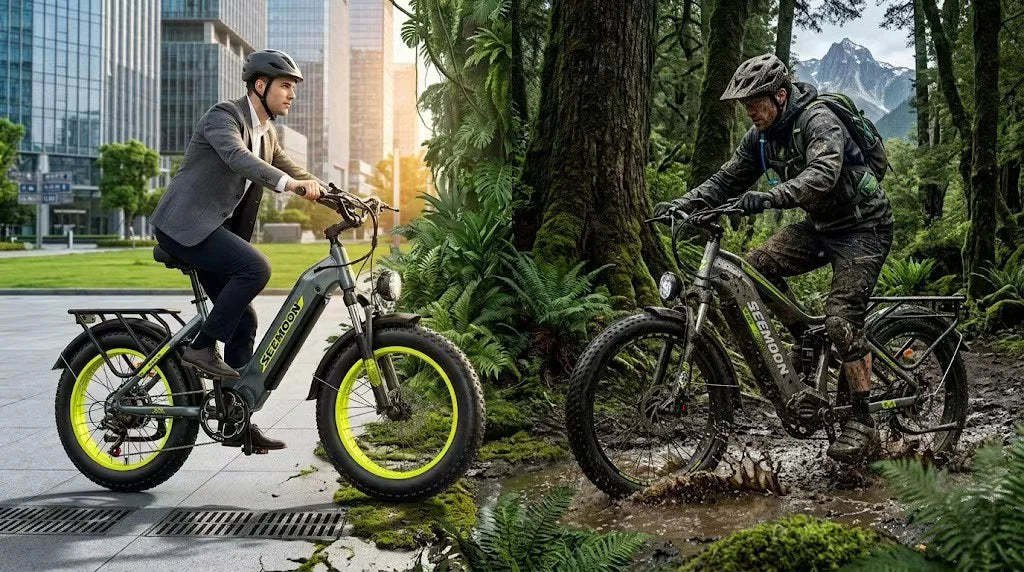
The e-bike revolution has completely transformed the way we ride. When you decide to buy an e-bike, you immediately face one of the biggest hurdles in the purchasing process: choosing the right suspension system.
Should you go with a lightweight, efficient hardtail ebike, or is it worth investing the extra money into a plush, terrain-conquering full suspension ebike?
In this comprehensive guide, we are breaking down exactly how ebike suspension works, the expanded pros and cons of each type, and how to choose the perfect Seemoon ebike for your specific riding style.
What is eBike Suspension and How Does It Work?
Before diving into the hardtail vs. full suspension debate, it is crucial to understand what suspension actually does out on the road or trail. A bicycle suspension system is engineered to do two primary things: absorb harsh impacts from the terrain (providing rider comfort) and keep your tires glued to the ground (providing traction, braking power, and control).
A complete suspension setup consists of two main components:
-
The Front Suspension (Suspension Fork): Located at the front wheel, this consists of two stanchions that slide into lower legs. Inside, either a heavy-duty steel coil spring or a compressed air chamber absorbs impacts. The amount the fork can compress is called "travel" (usually measured in millimeters, ranging from 80mm for city bikes to 160mm+ for downhill beasts).
-
The Rear Suspension (Rear Shock): Located near the center of the frame, this connects the main front triangle to the rear swingarm. Utilizing a complex system of pivots and linkages along with a shock absorber, it allows the rear wheel to track uneven ground independently of the rest of the bike.
The Hardtail eBike Explained
A hardtail ebike is exactly what it sounds like: it features a suspension fork in the front, but the "tail" (rear of the bike) is "hard" or rigid, meaning it has no rear shock absorber.
The hardtail electric mountain bike remains the undisputed king of versatility and efficiency. It strikes a perfect balance between everyday practicality, commuting efficiency, and light off-road capability.

Pros of a Hardtail eBike
-
Maximum Pedaling Efficiency: Because there is no rear suspension to compress when you push down on the pedals, 100% of your energy (and the motor's energy) goes directly into moving the bike forward.
-
Lighter Overall Weight: Without the extra linkages, bearings, and heavy rear shock, hardtails are noticeably lighter. This makes them significantly easier to carry up a flight of apartment stairs, load onto a car rack, or maneuver in tight city traffic.
-
Superior Battery Range: The combination of a lighter frame and zero power loss from rear suspension movement means a hardtail will typically squeeze more miles out of a single battery charge compared to a full suspension model with the same motor.
-
Cost-Effective and Low Maintenance: Fewer moving parts mean hardtails are generally much more affordable. Furthermore, there are no rear pivot bearings to clean, grease, or replace, keeping your annual maintenance costs incredibly low.
Cons of a Hardtail eBike
-
A Rougher Ride on Harsh Terrain: If you hit a large root, rock, or deep pothole, the rigid rear wheel will bounce, transmits shock waves directly to the seat and up along your spine to the rest of your body.
-
Less Traction on Technical Climbs: On steep, bumpy, loose dirt trails, a rigid rear wheel tends to bounce off obstacles. This will cause the rear wheels to lose traction and skid.
The Full Suspension eBike Explained
A full suspension ebike (often referred to as a full suspension electric mountain bike or "full squish") features both a front suspension fork and a rear shock absorber.
This design is engineered for capability, comfort, and conquering the unknown. Whether you are dropping off rocky ledges, flying down root-filled mountain trails, full suspension is the gold standard of comfort and control.

Pros of a Full Suspension eBike
-
Ultimate Comfort: The rear shock absorbs the vast majority of trail chatter, potholes, and drops. It dramatically reduces the physical toll on your lower back, knees, and ankles, allowing you to ride much longer distances without pain.
-
Superior Traction and Control: Because the rear wheel can move independently, it tracks the contours of the ground perfectly. This means your tire is always in contact with the dirt, providing massive grip for cornering, braking, and climbing steep, loose trails.
-
Safer at High Speeds: When descending rapidly over rugged terrain, a full-suspension e-bike helps the rider maintain a stable center of gravity, keeping them firmly connected to the bike.
-
Versatility for Extreme Terrain: There is virtually no trail or urban obstacle a high-powered full suspension electric mountain bike cannot conquer.
Cons of a Full Suspension eBike
-
Higher Price: The complex engineering, extra materials, and expensive rear shock components naturally drive the price up.
-
Heavier Build: The added frame linkages and shocks add significant weight. (However, on an ebike, the powerful electric motor easily compensates for this extra weight while riding).
-
More Maintenance Required: Pivot bearings collect dirt and will eventually need cleaning and replacing to stop creaking and maintain smooth operation.
How to Choose: Which is Right for You?
Making the choice comes down to honestly assessing your lifestyle and riding environment:
-
Choose a Hardtail if: Your primary goal is daily commuting, running errands, fitness, and riding on paved roads, smooth dirt paths, or well-maintained gravel. You value a lighter bike, better battery range, and low maintenance.
-
Choose a Full Suspension if: You plan to ride aggressive off-road trails, tackle steep mountain descents, ride over large rocks and roots, or if you have joint/back issues and simply want the most comfortable, shock-absorbing ride possible regardless of the terrain.

Meet Your Match: Seemoon’s Premium eBikes
At Seemoon, we engineer electric bikes to dominate whatever landscape you put in front of them. Based on your different suspension needs, here are our two flagship recommendations.
1. The All-Rounder: Seemoon SM5 Hardtail eBike
Best for: Daily Commuting, Light Gravel Trails, and Maximum Efficiency
If you need a reliable daily driver that won't flinch at a dirt road, the Seemoon SM5 is your ultimate multi-purpose machine.
-
Power & Efficiency: It boasts a 3000W peak power motor that flattens city hills with ease, combined with a rigid rear frame that ensures every ounce of that power translates into forward momentum.
-
Comfort: The high-quality front suspension fork eats up curb drops and potholes seamlessly.
-
Safety & Tech: Equipped with reliable mechanical brakes, a twist throttle with a built-in security lock, and a smart BMS (Battery Management System) for safe charging.
-
Versatility: Featuring five distinct riding modes, you can precisely adjust the level of assistance based on the terrain and your riding needs, thereby maximizing battery range and conserving energy.

2. The Off-Road Beast: Seemoon SM3 Full Suspension eBike
Best for: Heavy Off-Roading, Mountain Trails, and Ultimate Comfort
If you refuse to compromise on power, traction, or capability, the Seemoon SM3 full suspension electric mountain bike is a heavy-duty trail monster.
-
Unstoppable Power: Driven by 6000W peak power dual brushless motors (front and rear), this bike delivers rapid acceleration and the torque required to climb the steepest, most unforgiving mountain inclines.
-
Plush Ride: The premium dual suspension system (front fork + heavy-duty rear shock absorber) isolates you from violent impacts, making boulders feel like pebbles.
-
Endless Range: Powered by a massive 60V 30Ah high-density lithium-ion battery, giving you the juice to explore deeper into the wilderness.
-
Extreme Durability: Built around a rugged 6061 aluminum alloy frame and stopped by a highly responsive hydraulic brake system, providing absolute control when flying down technical descents.

Final Thoughts
At the end of the day, suspension is the single most defining characteristic of how your ebike will feel and perform. A hardtail ebike like the Seemoon SM5 offers incredible pedaling efficiency, lower weight, and simplicity for the urban commuter and casual gravel rider. Conversely, a full suspension electric mountain bike like the Seemoon SM3 provides the unmatched traction, premium comfort, and shock absorption necessary to tame the wildest off-road trails.
Assess your local terrain, determine your budget, pick your ideal suspension setup, and let a Seemoon ebike transform the way you experience the outdoors.
Frequently Asked Questions (FAQ)
Can you ride a hardtail ebike on mountain trails?
Yes! Hardtail ebikes are perfectly capable of handling mild to moderate mountain trails, smooth singletrack, and gravel paths. However, on highly technical trails with large drops, heavy roots, and rock gardens, a hardtail will be bouncy, less comfortable, and slower than a full suspension bike.
Is a full suspension electric mountain bike worth the extra money?
If you plan to ride aggressively off-road, frequently tackle steep, uneven terrain, or suffer from lower back and joint pain, a full suspension ebike is absolutely worth the investment. The added traction, safety, and comfort completely change the riding experience.
Which suspension type is better for commuting?
For the vast majority of commuters, a hardtail ebike with front suspension is the better choice. It is lighter, more efficient for pedaling on pavement, offers better battery range, and requires less maintenance, while the front fork is still plenty capable of absorbing standard city potholes.
Share:
Claim Your Freedom: The Seemoon Best Ebike Deals 4th of July & Ultimate Celebration Guide
How Can You Safely Ride an Electric Bike in the Heat and Protect Your Battery?