
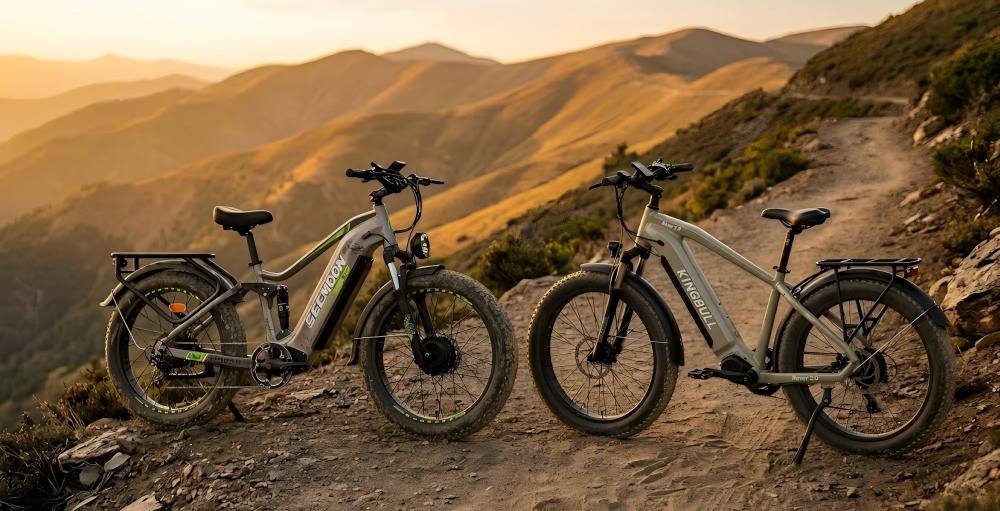
Finding an all-terrain fat tire e-bike that genuinely performs both on pavement and deep in the backcountry is a challenge. In our latest field evaluations, we put two highly debated 26x4.0-inch fat tire machines head-to-head: the high-voltage Seemoon SM3 and the classically configured KINGBULL Rover 2.0.
While both feature robust aluminum frames and puncture-resistant rubber aimed at conquering complex topography, our teardown and trail testing revealed two radically different engineering philosophies. Whether you are an RV overlander looking for a backcountry extraction vehicle or a weekend warrior seeking a reliable trail commuter, understanding the nuances between AWD extreme power and standard rear-wheel drive is crucial.
Here is our definitive, engineering-focused comparison of the Seemoon SM3 and the KINGBULL Rover 2.0.
Core Spec Showdown: The Numbers at a Glance
Before we dive into the ride dynamics, let’s look at the raw specifications that define these two machines.
| Feature | Seemoon SM3 | KINGBULL Rover 2.0 |
| Peak Power | 6000W (Dual Motor AWD) | 1300W (Rear Hub) |
| Max Torque | 200 Nm | 80 Nm |
| Top Speed | 42-45 mph | 28 mph |
| Architecture | 60V System | 48V System |
| Battery Specs | 60V 30Ah (Removable from bottom) | 48V 720Wh (Samsung Cells) |
| Max Range | Up to 120 miles | Up to 85 miles |
| Sensor Type | Cadence (Speed) Sensor | Torque Sensor |
| Suspension | Full (Front Fork + Rear Shock) | Full (Front Fork + Mid Shock) |
2. Power Dynamics & Traction: AWD Dominance vs. RWD Stability
Based on our field testing, the most significant differentiator between these two e-bikes lies in their approach to power output and traction control.
Seemoon SM3: The Pinnacle of Extreme Off-Grid Power
The Seemoon SM3 sets a benchmark for all-terrain capability. It features a custom-designed All-Wheel Drive (AWD) system equipped with dual 2000W brushless hub motors.
-
Unmatched Output: When both motors are engaged, the SM3 unleashes a staggering 6000W of peak power and 200Nm of torque.
-
Superior Traction: The AWD system ensures relentless grip on challenging terrains, easily hauling the bike up 30-degree gravel inclines and through loose sand without rear-wheel slip.
-
Tactical Versatility: Riders can use In-vehicle smart LCD display to manually switch between single-motor mode (to maximize battery efficiency) and dual-motor mode (for maximum climbing power).

KINGBULL Rover 2.0: Proven Rear-Wheel Drive Reliability
Conversely, the KINGBULL Rover 2.0 prioritizes steady, durable performance by utilizing the highly regarded Bafang 750W rear hub motor.
-
Efficient Output: Known for its industry-leading longevity, this motor delivers 1300W of peak power and 80Nm of torque, Designed to conquer steep slopes and rugged mountain roads, it delivers powerful and stable performance, providing the ultimate electric mountain biking experience.
-
Terrain Handling: While the Rover 2.0 provides ample thrust for urban hills and hard-packed dirt trails, it faces limitations in extreme conditions. Navigating deep mud—terrain the SM3 conquers effortlessly—requires substantial manual pedaling effort from the rider.
Quick Spec Comparison
| Feature | Seemoon SM3 | KINGBULL Rover 2.0 |
| Drivetrain | All-Wheel Drive (AWD) | Rear-Wheel Drive (RWD) |
| Motor Type | Dual 2000W Brushless Hub | Single Bafang 750W Hub |
| Peak Power | 6000W | 1300W |
| Torque | 200Nm | 80Nm |
| Best Terrain | Deep mud, loose sand, steep gravel (30°) | Urban inclines, hard-packed dirt trails |
3. E-Bike Battery Architecture, Range, and Electrical Systems
In the world of high-performance electric bikes, voltage is the lifeblood of performance. A higher voltage system allows for greater power delivery, increased torque, and sustained speed with significantly less heat generation.
60V High-Voltage Platform vs. 48V Systems
The Seemoon SM3 is engineered with a robust 60V electrical architecture. Compared to the standard 48V system found on the KINGBULL Rover 2.0, the SM3’s 60V platform experiences drastically less motor heat loss when operating under heavy loads.
This high-voltage advantage is exactly what allows the Seemoon SM3 to efficiently sustain top speeds of 42–45 mph without overheating the controller or draining the battery prematurely due to voltage sag.
Want to learn more about the advantages of high-voltage architecture? Read our comprehensive guide on 60V vs 48V e-bike architectures。
Battery Capacity, Range, and UL 2849 Safety Certifications
When choosing an e-bike, electrical safety is paramount. It is reassuring that both the Seemoon and KINGBULL batteries possess UL 2849 certification, meeting the strictest electrical and fire safety standards required in the United States.
Here is how the two e-bike batteries compare in daily performance:
-
Seemoon SM3:
-
Specs: Equipped with a high-capacity 60V 30Ah removable, self-developed lithium-ion battery, this battery is tailor-made for the SM3's unique all-terrain requirements, compared to general-purpose batteries.
-
Max Range: Delivers an ultra-long range of up to 120 miles on pedal assist.
-
Design Advantage: Because of its sheer size, Seemoon engineers designed the battery to slide out conveniently from the bottom of the downtube. This unique design not only makes removal easier but also lowers the e-bike's center of gravity, drastically improving high-speed stability.

-
-
KINGBULL Rover 2.0:
-
Specs: Utilizes an integrated 720Wh battery built with premium Samsung INR21700-50G cells, It is encased in a precision-machined aluminum alloy shell. It features advanced waterproofing, a highly efficient heat dissipation system, and dual-layer impact and overheat protection. famous for their exceptional cycle life and safety.
-
Max Range: Yields a reliable maximum range of up to 85 miles on pedal assist.
-
Design Advantage: The efficient 720Wh capacity is sufficient to meet the needs of daily commuting and leisure riding.
-
4. Handling & Terrain Adaptability: Engineered for Performance
How an e-bike translates raw power to the dirt depends on three pillars: sensor precision, suspension travel, and frame geometry. Here is how the SM3 and Rover 2.0 compare in real-world off-road conditions.
Sensor Technology: Cadence vs. Torque
Choosing the right sensor is a matter of riding style. Whether you want raw power or a natural feel determines which bike is right for you.
-
SM3 (Speed Sensor): The SM3 utilizes a high-sensitivity speed sensor. Unlike torque sensors, which measure rider input, speed sensors specifically measure actual output. Speed sensors are typically mounted near the rear wheel or integrated within the in-wheel motor to measure the wheel's precise rotational speed. The higher the wheel's rotational speed, the greater the corresponding assist strength.
-
The Advantage: By continuously tracking your speed, the speed sensor can accurately tell the controller when to apply power, and more importantly, when to cut power off to comply with Level 1, 2, or 3 legal speed limits.

-
-
Rover 2.0 (Torque Sensor): The Rover 2.0 features a sophisticated torque sensor that can accurately detect your pedaling force and continuously adjust the assist level according to the intensity of your pedaling, aiming to provide more immediate and smoother assistance. This intelligent system makes the riding experience closer to that of a traditional bicycle, and also less strenuous.
-
The Advantage: This creates a "bionic" riding experience where the motor mimics your effort. It is the ideal choice for fitness-focused riders and those navigating technical singletracks that require precise, linear power delivery.
-
Drivetrain & Electronic Riding Modes
While both models feature a reliable Shimano 7-speed manual transmission, their electronic configurations cater to different utility needs:
| Feature | SM3 (High Utility) | Rover 2.0 (Standard Trail) |
| Transmission | Shimano 7-Speed | Shimano 7-Speed |
| Throttle Type | Premium Lockable Twist | Standard FT158X 3-Pin Twist |
| Riding Modes | Pure Electric, PAS (1-5), Dual Motor Mode, Cruise Control | 5 Levels of Pedal Assist, Throttle |
| Special Features | 6km/h Walk Mode | Standard Trail Configuration |
Full Suspension Systems: Mastering the Off-Road
To conquer complex landscapes, both bikes utilize 26x4.0-inch fat tires and aircraft-grade aluminum alloy frames. However, their shock absorption philosophies differ:
SM3: The "Dual-Purpose" Versatility
Built on a rigid 6061 aluminum alloy frame, the SM3 is designed for a "one bike, two uses" lifestyle.
-
Front Fork: Features Lockout & Preload adjustments.
-
Clockwise: Lock the suspension for energy-efficient commuting on pavement.
-
Counter-clockwise: Open the travel to soak up brutal impacts on forest trails.
-
-
Rear Support: A robust rear shock complements the front end, offering a balanced, plush ride for heavy-duty off-roading.

Rover 2.0: Technical Cushioning
The Rover 2.0 focuses on specialized damping for technical trails.
-
Front Suspension: 100mm travel coil spring fork.
-
Rear Suspension: DNM brand mid-mounted shock with 45mm of travel and adjustable damping.

-
Performance: This setup provides superior "chatter" absorption, making it a highly respectable choice for riders who prioritize comfort on rocky or rooted paths.
5. Premium E-Bike Safety & Security: Seemoon SM3 vs. Rover 2.0
When investing in a premium fat-tire e-bike, securing your asset and ensuring rider safety in heavy traffic are top priorities. Here is a comprehensive comparison of the braking, anti-theft, and signal systems of the Seemoon SM3 and Rover 2.0.
Braking Performance: The Necessity of Hydraulic Disc Brakes
Due to their weight and speed, mechanical brakes are widely considered insufficient for heavy fat-tire e-bikes. Both models wisely upgrade to high-performance hydraulic systems to ensure maximum stopping power:
-
Seemoon SM3: Equipped with heavy-duty hydraulic disc brakes paired with an automatic motor cut-off switch for instant, responsive stopping.
-
Rover 2.0: Utilizes ZOOM-brand dual-piston hydraulic brakes, which also feature integrated motor cut-off levers for enhanced rider safety.
E-Bike Theft Prevention & VIN Registration
With e-bike theft becoming a rising concern for urban commuters, robust physical security is essential. The Seemoon SM3 leads in this category with a comprehensive anti-theft architecture:
-
Dual-Layer Physical Security: Features a secure battery lock to deter battery pack theft, alongside a key-hole twist throttle lock to prevent unauthorized operation.
-
Built-in VIN (Vehicle Identification Number): Acting as the e-bike's permanent "ID card," the SM3 features a unique VIN explicitly etched into the head tube. This feature is critical for e-bike insurance claims and greatly increases the chances of police recovery if stolen.
Lighting & Signal Systems: Automotive-Grade Visibility vs. Standard LEDs
Navigating city traffic safely requires clear communication with motorists, making advanced lighting systems a crucial feature.
-
Seemoon SM3 (Full Signal Suite): Engineered for absolute visibility, it includes a complete automotive-grade signal suite. This features a high-lumen headlight, a responsive taillight with high-beam braking functionality, and integrated front and rear turn signals.

-
Rover 2.0 (Basic Illumination): Offers standard, entry-level visibility features, relying on a 48V LED headlight, an electronic horn, and a basic flashing taillight.
Head-to-Head Comparison: Seemoon SM3 vs. KINGBULL Rover 2.0
Choosing the best all-terrain fat tire e-bike depends on whether you prioritize raw, uncompromising power or a refined, component-focused ride. Below is a detailed summary of the pros and cons for the Seemoon SM3 and the KINGBULL Rover 2.0 to help assist your buying decision.
Seemoon SM3: The Ultimate High-Performance AWD E-Bike
The Seemoon SM3 redefines the hyper-e-bike category, catering specifically to off-road enthusiasts and overlanders who demand peak performance.
-
Pros (Advantages):
-
Unmatched Powertrain: Delivers extreme power via a 60V platform, boasting a blistering 6000W peak output and 200Nm of torque.
-
All-Terrain Traction: Features an adaptable AWD (All-Wheel Drive) system for conquering difficult landscapes.
-
Massive Range: Offers an impressive 120-mile range on a single charge.
-
Premium Safety & Security: Equipped with automotive-grade lighting for visibility and excellent anti-theft features, including a unique head tube VIN.
-
-
Cons (Disadvantages):
-
Pedal Feel: The speed sensor may feel less natural to traditional cyclists compared to torque-sensing models.
-
Learning Curve: The extreme power output requires a distinct learning curve for beginner riders.
-
KINGBULL Rover 2.0: The Reliable, Smooth-Riding Commuter
The KINGBULL Rover 2.0 focuses on ride quality and component reliability, making it an ideal choice for casual trail riding and daily commuting.
-
Pros (Advantages):
-
Premium Componentry: Built with highly trusted, globally recognized brand-name parts, including a Bafang motor, Samsung battery cells, and ZOOM hydraulic brakes.
-
Natural Ride Quality: A responsive torque sensor provides a smooth, intuitive, and natural pedaling experience.
-
-
Cons (Disadvantages):
-
Moderate Performance: With 1300W peak power and a 28mph top speed, it has limited capability for extreme off-roading.
-
Range Limitations: Offers a shorter battery range compared to higher-voltage competing models.
-
Conclusion: Which Fat Tire E-Bike is Right For You?
Ultimately, choosing between these two capable fat tire electric bikes comes down to fitting the specifications to your specific lifestyle needs.
Choose the KINGBULL Rover 2.0 if: You are a consumer who values the psychological security and reliability of brand-name components. If you primarily plan to use your e-bike for commuting on city streets, paved bike lanes, or well-maintained dirt paths, the KINGBULL Rover 2.0 is a highly dependable and comfortable choice.
Choose the Seemoon SM3 if: You are an off-road enthusiast, a hardcore overlander, or a rider who refuses to compromise on pure performance. With its high-voltage 60V architecture, AWD traction, and massive 6000W output, the Seemoon SM3 is an uncompromising, terrain-conquering machine built for those who push boundaries.
Share:
The Ultimate Tactical Electric Bike for Search & Rescue and Off-Road Patrol
The Ultimate Heavy-Duty E-Bike Guide for Urban Commuting and City Traffic